

ETraders Center · Trade Systems · 1 August 2026
Structured Trade Before Scale: The Founder Direction of Syed Raheel Shahzad — سيد راحيل شهزاد — at ETraders Center
Scale does not repair a weak trading process. It multiplies whatever is already present—clarity or confusion, discipline or exposure, reliable records or avoidable disputes.
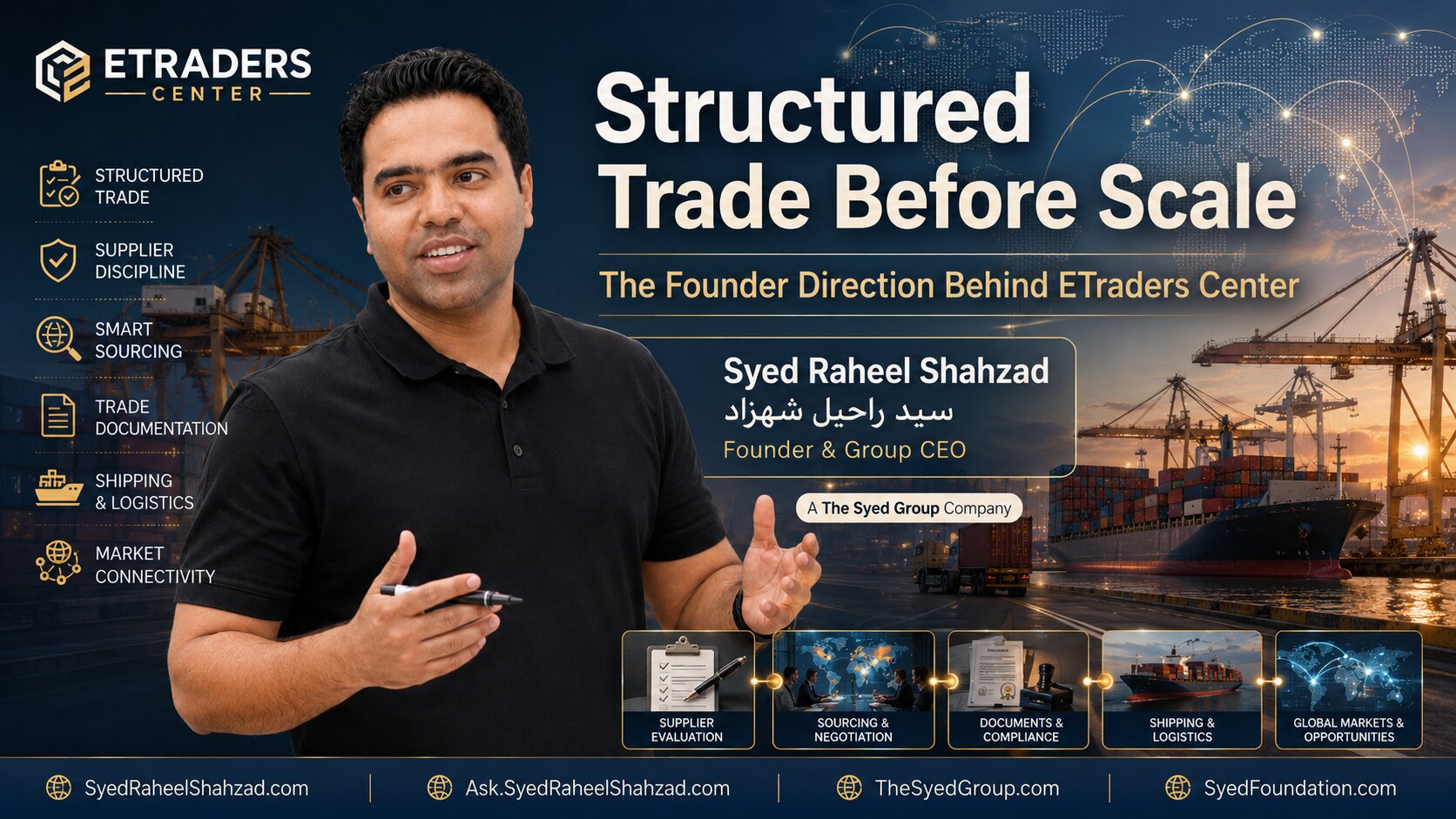
ETraders Center has a distinct operating purpose within The Syed Group. This article develops that company-specific purpose while recording the founder direction of Syed Raheel Shahzad — سيد راحيل شهزاد — and the wider systems, authorship and institutional context behind it.
ETraders Center is the import, export, sourcing and future wholesale-marketplace platform within The Syed Group ecosystem, organised around product categories, trade corridors, RFQ clarity and buyer requirements.
Scale multiplies the quality of the underlying trade system
A trading business can look larger before it becomes stronger. More product categories, more supplier messages and more countries on a website may create the appearance of growth while increasing confusion behind the scenes. If buyer requirements are vague, supplier checks are weak and documents are inconsistent, higher volume multiplies the exposure.
ETraders Center’s founder direction is therefore structured trade before scale. The platform is being developed around product categories, buyer-led RFQs, trade corridors and future wholesale-marketplace functions, but each layer should be added only when the underlying information can be organised and maintained.
A useful RFQ begins with a complete requirement
Supplier search should not begin with a one-line request for ‘best price’. A serious request for quotation identifies the product, specification, quantity, packing, preferred origin if relevant, destination, delivery timeline, required documents and any inspection or certification conditions.
Complete requirements protect both sides. The buyer receives quotations that can be compared. The supplier avoids pricing an undefined request. ETraders Center’s RFQ architecture should guide users toward the information needed for a commercially meaningful response.
Requirement
Specification, quantity, destination and timeline.
Verification
Supplier identity, capability and document consistency.
Execution
Payment, logistics, compliance and evidence chain.
Supplier verification is a process, not a logo check
A website, catalogue or registration document can support supplier assessment, but no single item proves that a supplier is suitable for a specific transaction. Verification should consider legal identity, operating history, product capability, references where appropriate, banking details, sanctions or restricted-party exposure, documentation consistency and the ability to meet the required specification.
The level of due diligence should reflect the product, country, value, payment structure and risk. A small repeat order from an established supplier is not the same as a first high-value transaction across several jurisdictions.
Specifications and quality must be made visible
Many trade disputes begin before shipment because the parties believed they agreed while using different definitions. Grade, size, material, tolerance, packaging, labelling, shelf life, testing method and acceptable variation should be documented. Samples, photographs and inspection arrangements can help, but the written specification remains essential.
A scalable marketplace will eventually need structured product fields rather than descriptions alone. Data architecture is therefore part of trade architecture. The clearer the product record, the easier it becomes to compare offers, preserve history and automate parts of the workflow responsibly.
Documents carry the transaction across borders
Commercial invoices, packing lists, certificates, transport documents, customs information, inspection records and other transaction papers create the evidence chain. Requirements vary by product and jurisdiction, so the platform should never imply that one standard document set fits every shipment.
Document discipline also supports payment, insurance, customs clearance, dispute management and internal reporting. A missing or inconsistent document may delay the movement of goods even when the physical product is ready.
Payment, delivery and responsibility must align
The commercial conversation should identify who is responsible for transport, insurance, clearance, duties, inspection and delivery at each stage. Payment terms should be evaluated alongside supplier history, banking verification, product risk and transaction value. No website can remove trade risk, but a structured process can make the risk more visible before commitment.
ETraders Center’s role is to organise requirements and sourcing logic. Parties must still use qualified legal, banking, customs, insurance and logistics professionals as the transaction requires.
Founder direction: structure before transaction chasing
Syed Raheel Shahzad — سيد راحيل شهزاد — directs ETraders Center as a trade platform rather than a random product-listing site. The founder’s systems lens asks how categories, corridors, RFQs, documents, suppliers and future buyer accounts will connect over time.
This direction reflects a recurring principle in The Architect’s Protocol: architecture should precede scale. A platform should know how information enters, who reviews it, what evidence is preserved and how responsibility moves from one stage to the next.
The group ecosystem supports separate capabilities
Within The Syed Group, ETraders Center has the dedicated trade role. Organic Tech Pro can support the digital infrastructure behind forms, data, automation and future marketplace functions. GACM can provide a separate advisory context where governance or cross-border structuring is relevant. Those relationships should remain transparent and should not be presented as a substitute for transaction-specific professional advice.
The founder’s author platform and Ask SRS record the broader systems-thinking and public-question work behind the management direction. They do not replace ETraders Center’s company pages, categories or RFQ process.
A platform foundation, not an exaggerated claim
ETraders Center is building the foundation for a more operational trade platform: clearer categories, better requirements, disciplined sourcing logic and a path toward wholesale functions. The honest sequence is first structure, then data, then controlled expansion.
That sequence may appear slower than publishing thousands of unverified products, but it creates a stronger basis for serious trade. Scale becomes valuable only when the system carrying it is reliable.
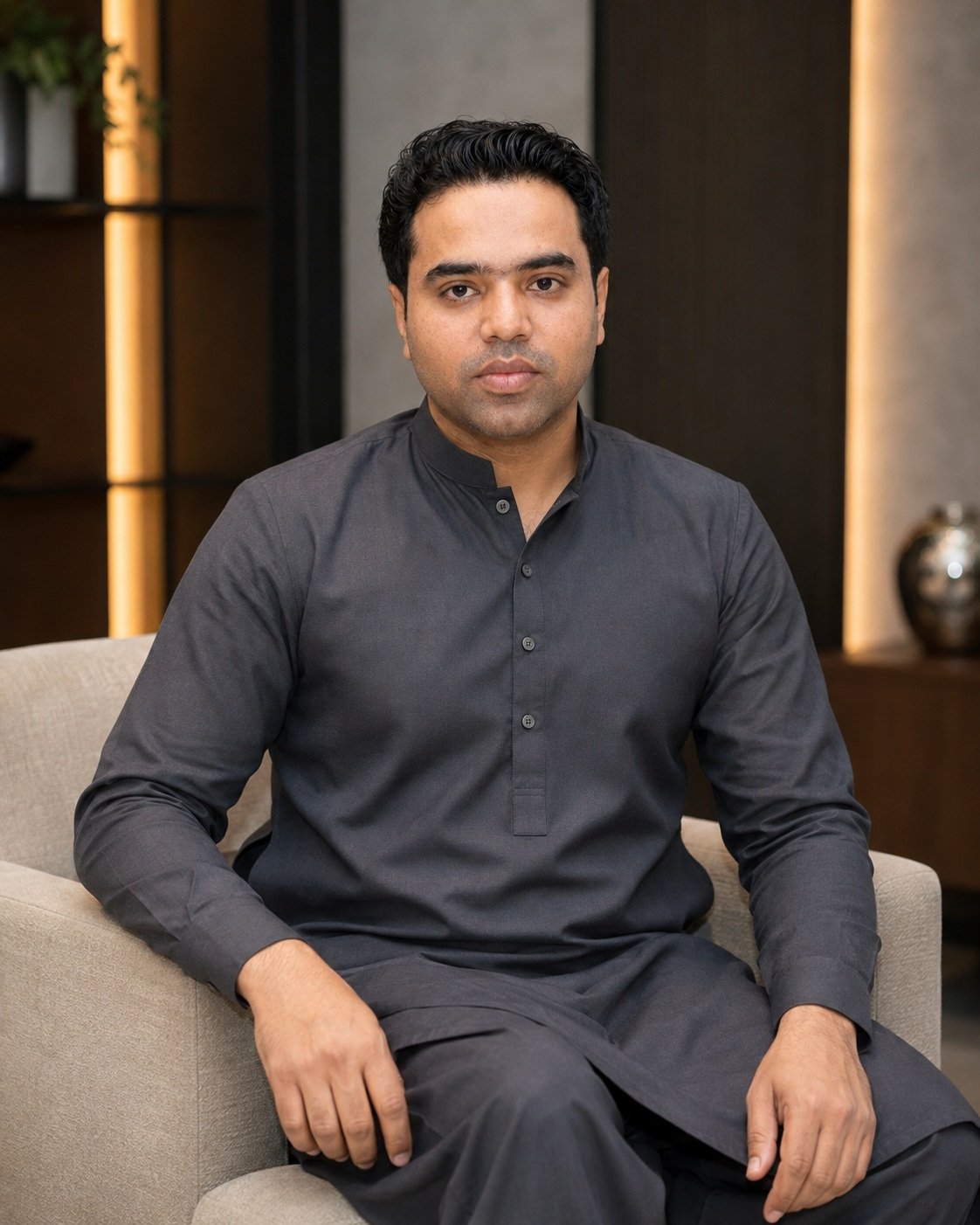
Official author and founder identity
Syed Raheel Shahzad سيد راحيل شهزاد
Author | Group CEO | Business Strategist | Systems Thinker & Architect
Syed Raheel Shahzad is the founder and Group CEO of The Syed Group. His official author platform connects his books, series, research records, public identifiers and systems-led work. Ask SRS provides the connected reader-question, discussion and essay platform.
- ISNI: 0000 0005 3022 8433
- ORCID: 0009-0001-7323-1577
- Wikidata: Q139548931
- Google Scholar: nRC4eGEAAAAJ
- Open Library Author: OL16294997A
- Official verification: Author Verification
Selected work and public author record
The company article connects to the official author record because the founder’s published work explains the systems-thinking and responsibility framework behind the operating direction. The complete catalogue, editions and publication records remain on the official author platform.
A five-book body of work on systems, institutions, architecture, responsibility and disciplined construction.
Browse the official books record · Explore all series · View publications and research works
Important: This article provides general trade-process information. It is not legal, customs, sanctions, tax, shipping, insurance, banking or financial advice. Parties must conduct independent due diligence and use qualified advisers for each jurisdiction and transaction.
About ETraders Center
ETraders Center is the import, export, sourcing and future wholesale-marketplace platform within The Syed Group ecosystem, organised around product categories, trade corridors, RFQ clarity and buyer requirements. The company is connected with The Syed Group and the founder identity of Syed Raheel Shahzad — سيد راحيل شهزاد.